
Inside Franklin County Tax Records
A Franklin County tax search draws on two official systems. The Franklin County Property Valuation Administrator sets assessed values for real estate. The sheriff then collects the county property tax. The county tax-and-revenue tools show current bills and balances. Frankfort may bill separately on its own. The PVA takes no payments. A clean county balance does not clear any city charge.
Keep the year beside every number. An assessed value sits on the assessment roll. An amount due belongs to a tax bill from a given year. A recorded sale price is a third figure. It never substitutes for either of the others.
| Tax record field | Meaning | Official source |
|---|---|---|
| Assessed value | Value placed on the tax roll under Kentucky's fair-cash-value standard | Franklin County PVA |
| Parcel or PIDN | Identifier used to match assessment, map, and bill records | PVA, GIS, and tax portals |
| Exemption | Approved reduction applied under a specific eligibility rule | PVA |
| Tax year and roll type | The billing period and roll selected for the search | OpenGov or VisualGov |
| Amount due | Balance displayed when the account was checked | Tax portal or sheriff-linked viewer |
| Delinquent instrument | Later collection record after an unpaid bill transfers to the Clerk | Franklin County Clerk |
Ordinary Kentucky real property is assessed at 100 percent of fair cash value. Farmland and statutory exemptions play by different rules. The bill still turns on the year's state and local rates, classification, and exemptions. One rate times a sale price rebuilds nothing.
Franklin County Tax Search Fields
The Franklin County OpenGov tax portal is the clearest documented address route. Payment Search and Property Tax Search both live there. A PIDN search is exact. Other entries may accept partial text, the portal indicates. An inactive-PIDN notice calls for a parcel or address cross-check rather than a guess.
| Search control | How to use it | Result clue |
|---|---|---|
| PIDN | Enter the exact property identifier | Property ID Number and amount due |
| MAP/Parcel | Use the parcel reference from GIS or PVA | Parcel number and location |
| Location Address | Search the situs address | Property location |
| Street Name | Try a partial street when the full address fails | Matching locations |
| Mailing Name | Search the name printed on the statement | Mailing name and balance |
| Payment Search | Choose PIDN, Block/Lot, or Name on Statement | Action, name, location, and amount due |
The OpenGov portal page displays the live entry point for a Franklin County property tax lookup. Open the official OpenGov search yourself.
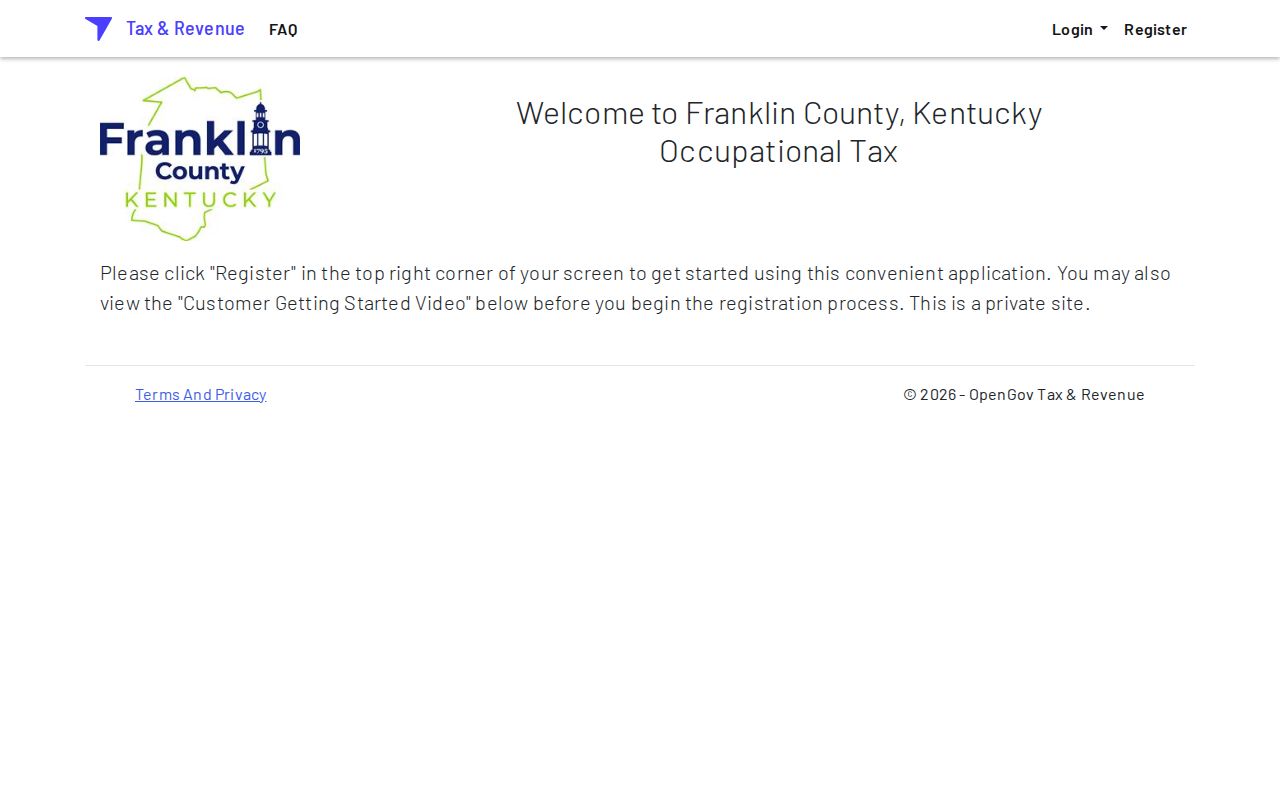
The image helps you spot the county-branded search. Read current results and balances from the live portal instead.
Note: Save the query type, tax year, and lookup date with a Franklin County property tax result so the balance keeps its context.
Trace a Franklin County Tax Bill
Begin with a known address or parcel number. Carry that same identifier into both offices' records. That keeps a similar owner name or street from pulling the wrong bill.
- Search OpenGov by the exact PIDN, parcel, address, street, or mailing name.
- Record the property location, selected year, parcel number, and amount due.
- Compare the assessment and any exemption with the Franklin County PVA record.
- For payment, follow the Franklin County sheriff property-tax page to its approved vendor.
- If the bill is delinquent, check the County Clerk's tax-sale notice and land index for later assignments or releases.
- Assessed value
- The value placed on the tax roll.
- Levy or tax rate
- The rate applied by a taxing authority for that year.
- Homestead exemption
- An approved reduction for a qualifying owner-occupant.
- Tax lien
- A legal claim tied to unpaid tax, not merely an online balance.
Online card payments through the sheriff-linked viewer require the tax bill number. Fees appear before payment. The county warns online payments can post slowly. Confirm the live account after paying rather than treating a receipt screen as a final roll update. The sheriff-linked Properly tax viewer offers another official route.
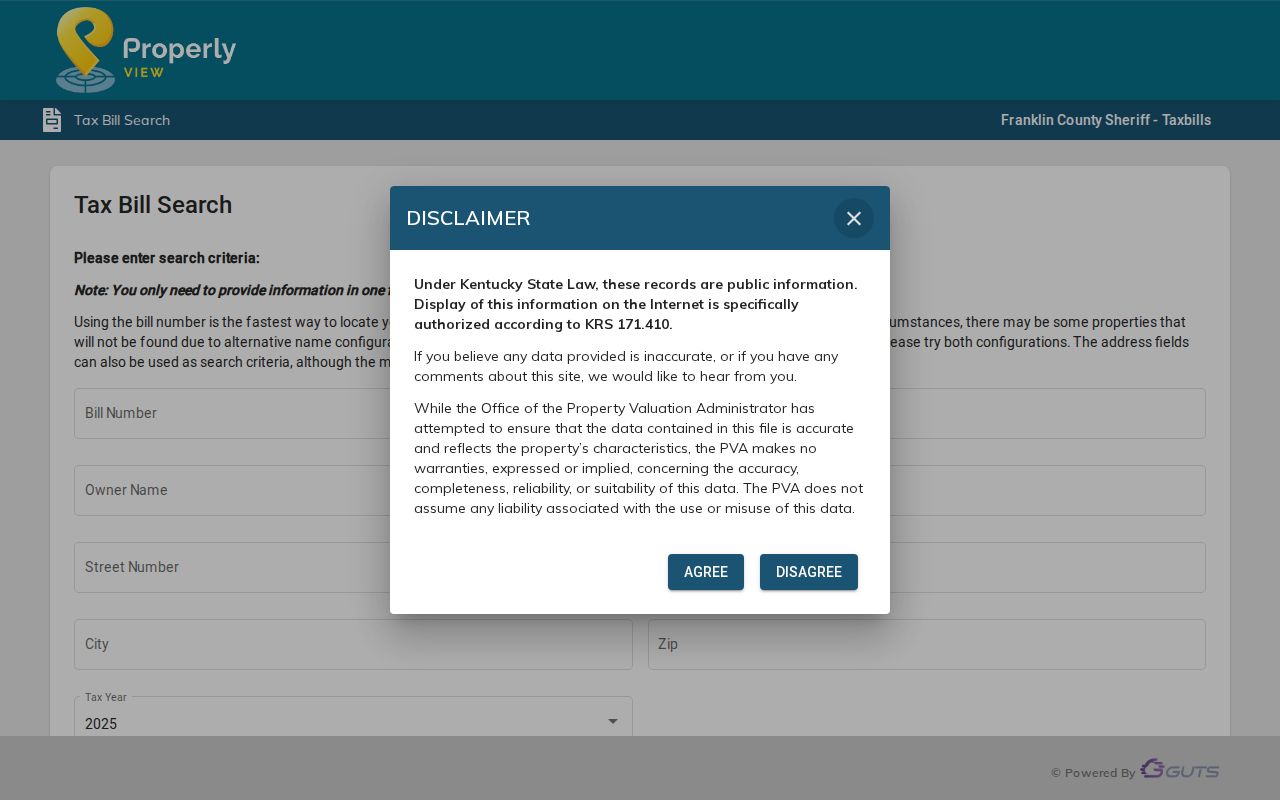
The image confirms the vendor's entry screen. The live account and tax year still control the balance due.
Another Franklin County Bill Route
The VisualGov tax collector search is another official route. It accepts owner name, location house number, location street name, property number, or tax bill number. Roll Type and Tax Year sit apart. Search one option at a time. Its instructions favor a partial surname, a street name without the house number, or an exact or partial property number. Match the live controls to the search screen before picking a year and roll type.
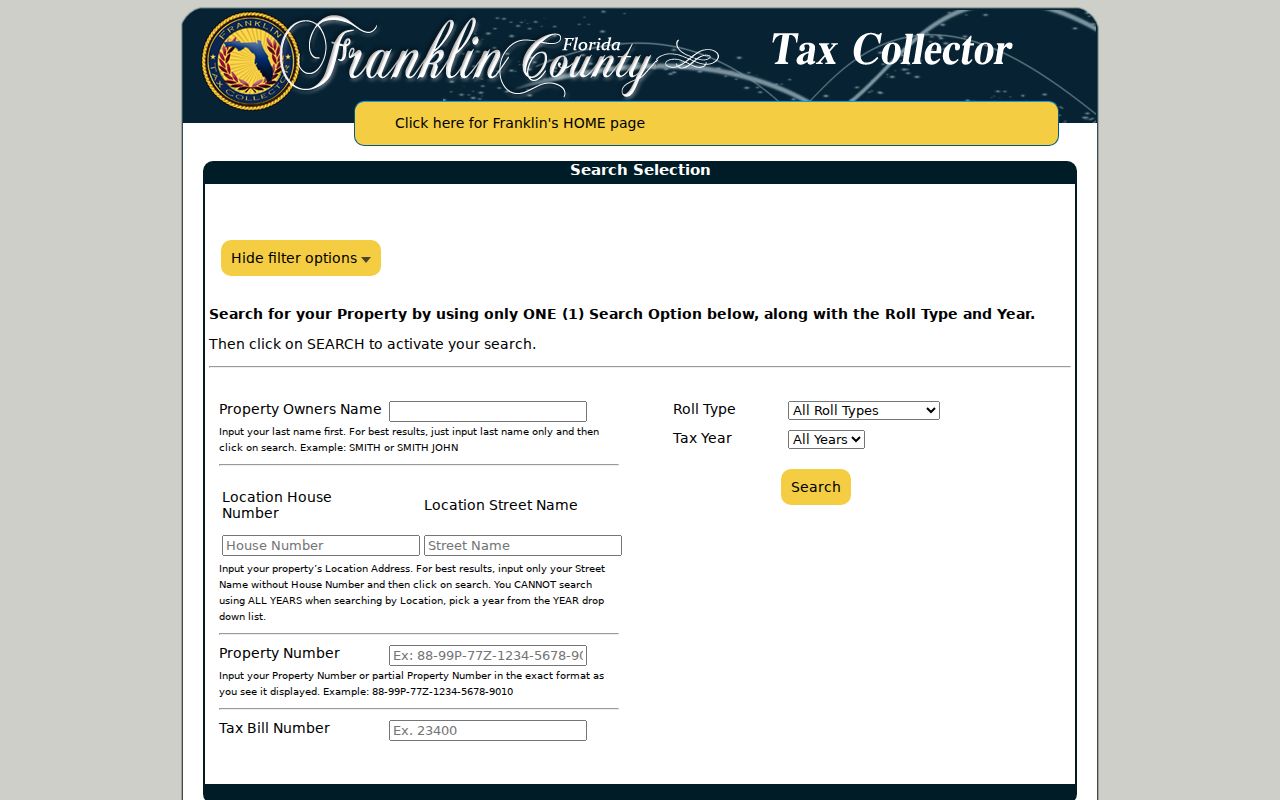
The year and roll selectors are easy to spot. A location search cannot span every year, so save the selected year with any record.
Note: Do not copy the vendor's sample property-number pattern as Franklin County's parcel format; the research did not verify that format locally.
Franklin County Assessment Cycle
Kentucky law sets the PVA's standard: fair cash value for ordinary real property. KRS 132.191 recognizes sales-comparison, cost, and income methods. The PVA may revalue property every year. Each parcel must also get a physical inspection at least once in a four-year cycle. Neither rule means every parcel changes annually. A quadrennial inspection is not a new sale appraisal. The state calendar lists real property from January 1 through March 1. The roll then opens for inspection on the first Monday in May for the statutory period. Filing dates shift with the year's weekdays. Check the current county notice and the Kentucky property-tax calendar before counting on any date.
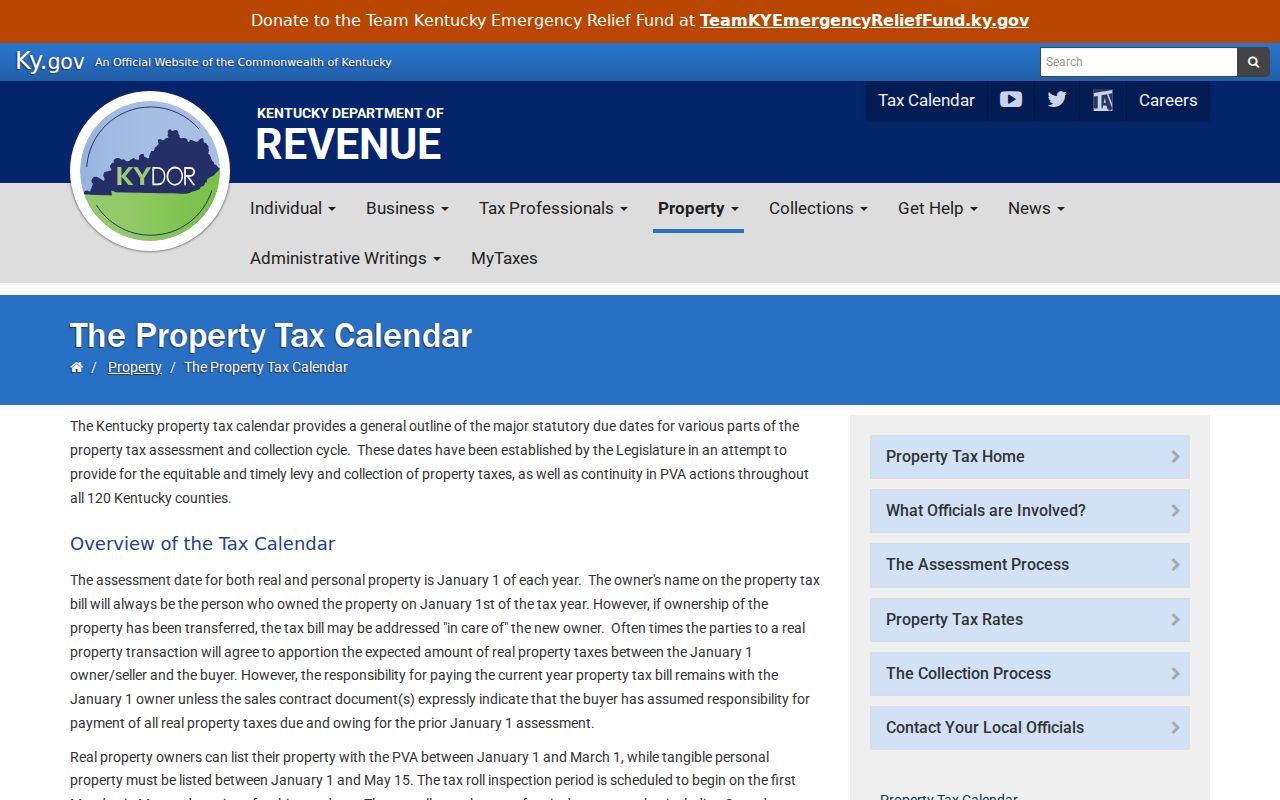
The year matters here. Franklin County issued a proposed 2026 tax-rate notice on September 1, 2026. Levies are what that notice concerns. A parcel's assessment remains a PVA value, so pair the calendar dates with the local PVA notice and keep the two sources apart.
Franklin County Homestead Relief
The Kentucky homestead exemption was $49,100 for 2025-26. It offsets assessed value for owners who are at least 65 or totally disabled, and the home must be owned, occupied, and maintained as a personal residence on January 1. An application and continued eligibility are both required. The amount changes every two years.
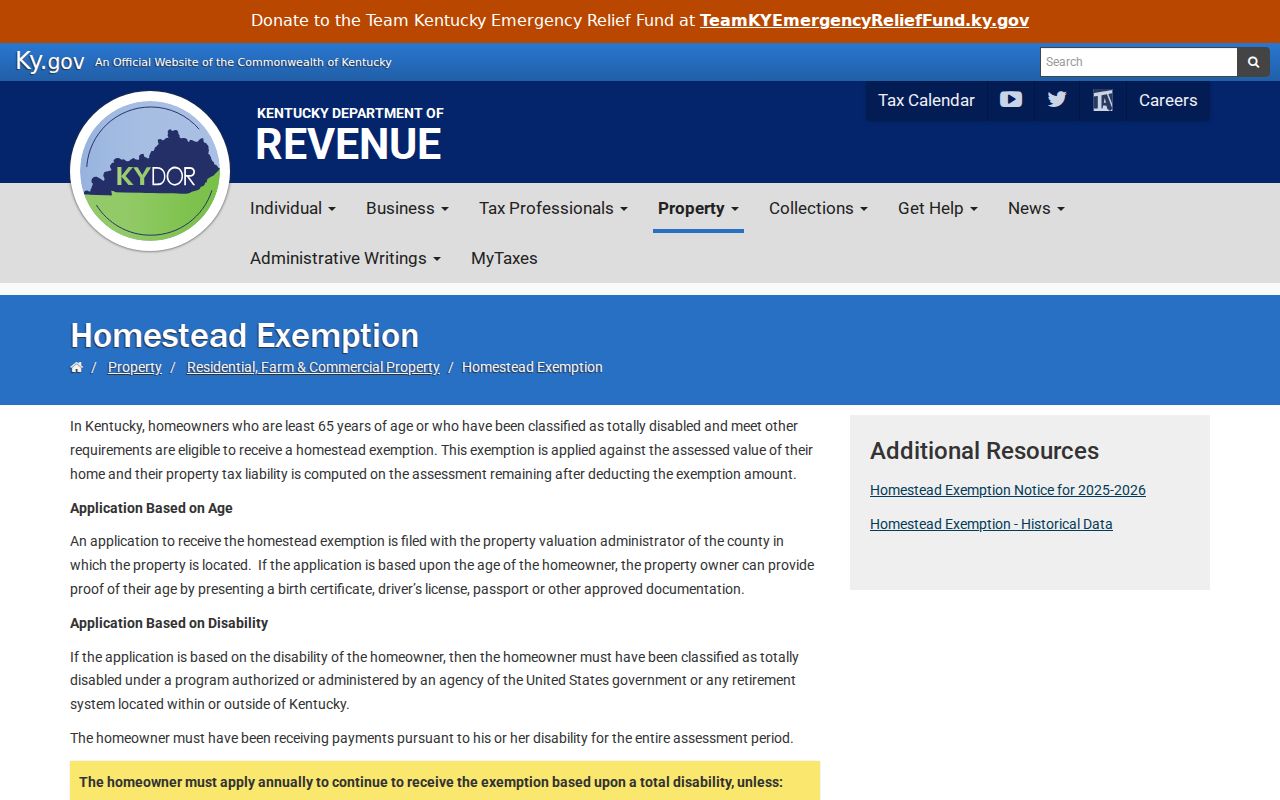
The exemption's amount and eligibility rules can change. Confirm both for the current tax year. This is not a blanket discount for every Franklin County homeowner, and a parcel record tells you only what the PVA has already approved.
Never infer eligibility from an owner of record, an age, or a mailing address. The PVA at 502-875-8780 can explain the local application path and current proof requirements.
Franklin County Delinquent Tax Trail
Delinquency builds a timeline rather than a single lasting label. For 2025 bills, the sheriff's notice laid out a discount window, a face-value period, two penalty stages, and an April 15 turnover to the Franklin County Clerk. The Clerk then posted an August 12, 2026 sale date for those same bills. Each date applies only to that bill year.
Once the account transfers, the Clerk's land records may show a certificate-of-delinquency assignment, reassignment, or release. Trace the account, the sale notice, the eCCLIX index, and any later release or deed in strict date order. A name on a sale list does not by itself prove ownership changed. The full chain does.
Note: Verify the current year's schedule before acting because Franklin County discount, penalty, turnover, and sale dates are notice-specific.
Contest a Franklin County Assessment
Start with the Franklin County PVA during the inspection period. Bring facts tied to value. These include a correct legal description, verified property characteristics, qualified comparable sales, photos, or a recent appraisal. If the conference settles nothing, the next step is an appeal. That appeal goes to the local board under the Kentucky schedule. File no later than one workday after the roll-inspection period closes. The board meets later under the statutory calendar. Further review routes are described by the Department of Revenue. Check the current PVA notice alongside the state calendar before counting out the last day.
Keep the conference on the facts in the assessment. The tax rate and the later bill balance are separate matters. Review the parcel identity, land and improvement details, property class, and the value year. If a comparable sale supports the claim, note its deed date, location, property type, lot size, and any reason it may not have been an open-market transfer. A tidy set of records gives the PVA and the local board something concrete to review.
Appeal window. Confer with the PVA first, then file with the local board by one workday after the inspection period ends.
An assessed-value dispute is not a payment dispute. Questions about a posted balance belong with the sheriff or the tax portal. Valuation and exemption questions belong with the PVA. For a plain comparison of value terms, see Franklin County property value records.
If an online system is down, phone the PVA for assessment questions. Or phone the sheriff for a current county bill. After delinquent accounts transfer, the Franklin County Clerk becomes the key office. That fallback chain also works for old property tax records. It applies when those records are missing from a live portal. Give the custodian the parcel reference, the tax year, and the exact record sought. One focused request beats asking a single office for every property tax document.