
What Franklin County Deed Records Put on Paper
Franklin County Clerk recording covers more than sale deeds. Mortgages and liens share the same land-record system. Yet those instruments usually burden an interest rather than transfer it. The instrument type tells what event occurred. Grantor, grantee, recording date, legal description, and a prior reference tie each event to its chain.
| Filed instrument | Effect in the land record | Typical research use |
|---|---|---|
| Deed | Conveys the interest described by its terms | Identify a transfer and the parties |
| Correction deed | Repairs an error in an earlier deed | Reconcile names or descriptions |
| Commissioner or sheriff deed | Documents a court-directed or official conveyance | Explain a break in an ordinary sale chain |
| Easement or restriction | Creates or states a use right or limit | Research access and land-use burdens |
| Plat | Records surveyed lots or a division plan | Match deed language to lot and block |
A filing proves acceptance, not clean title. Recording places the deed in Franklin County deed records, but it does not rule out other liens, probate orders, or unrecorded claims against the land.
Franklin County Deeds Through eCCLIX
The Clerk routes online users through its land-record search page and on to eCCLIX. Registration comes first. Private citizens create an account and search indexed filings. They can view or print documents under the portal's current terms. The public pages publish no earliest Franklin County index or image year. The eCCLIX registration screen shows that signup path. So an online stop is no starting point for the record series.
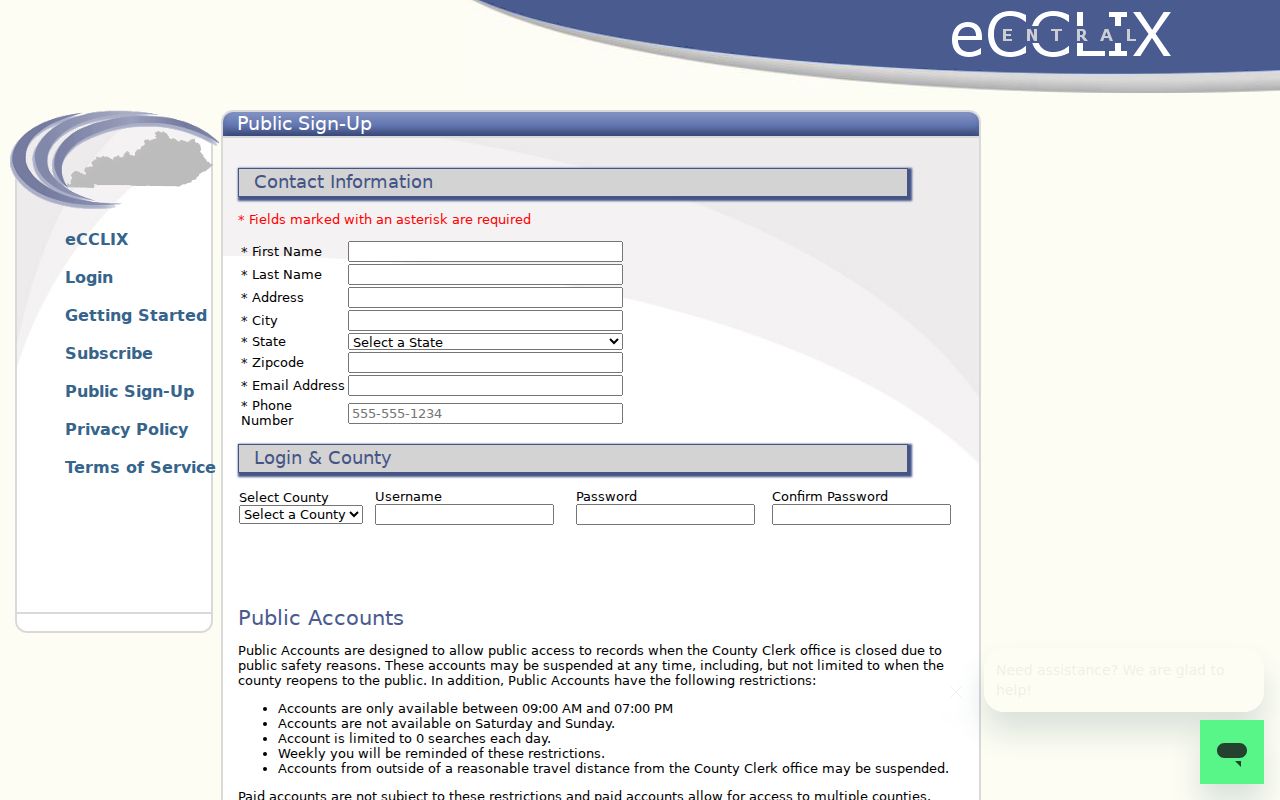
Think of the signup screen as an access checkpoint, not proof of a search allowance. The Clerk allows private citizens five searches per day. The public signup screen, by contrast, displays zero. Confirm the live rule before planning any long session at the portal.
Note: Record each document number and source date as soon as a useful result appears. Portal access limits can shift without warning.
Fields That Keep a Franklin County Deed Search Exact
Names alone invite false matches. Search both sides of the deal. Tie each index result to the parcel through party roles, the instrument reference, and the deed's land description.
| Index detail | How to use it | Check against |
|---|---|---|
| Grantor and grantee | Separate the transferring party from the recipient | Name variants, trusts, estates, and entities |
| Document type | Distinguish a deed from a lien, release, or correction | The instrument image |
| Recording date | Order filings by when the Clerk accepted them | Execution date shown in the deed |
| Book/page or document number | Retrieve the same filing at the portal or counter | Prior-reference line |
| Legal description | Confirm the land despite address changes | Plat and GIS parcel |
Coverage varies by county. The eCCLIX coverage selector shows what each county offers online, though it publishes no Franklin start date.
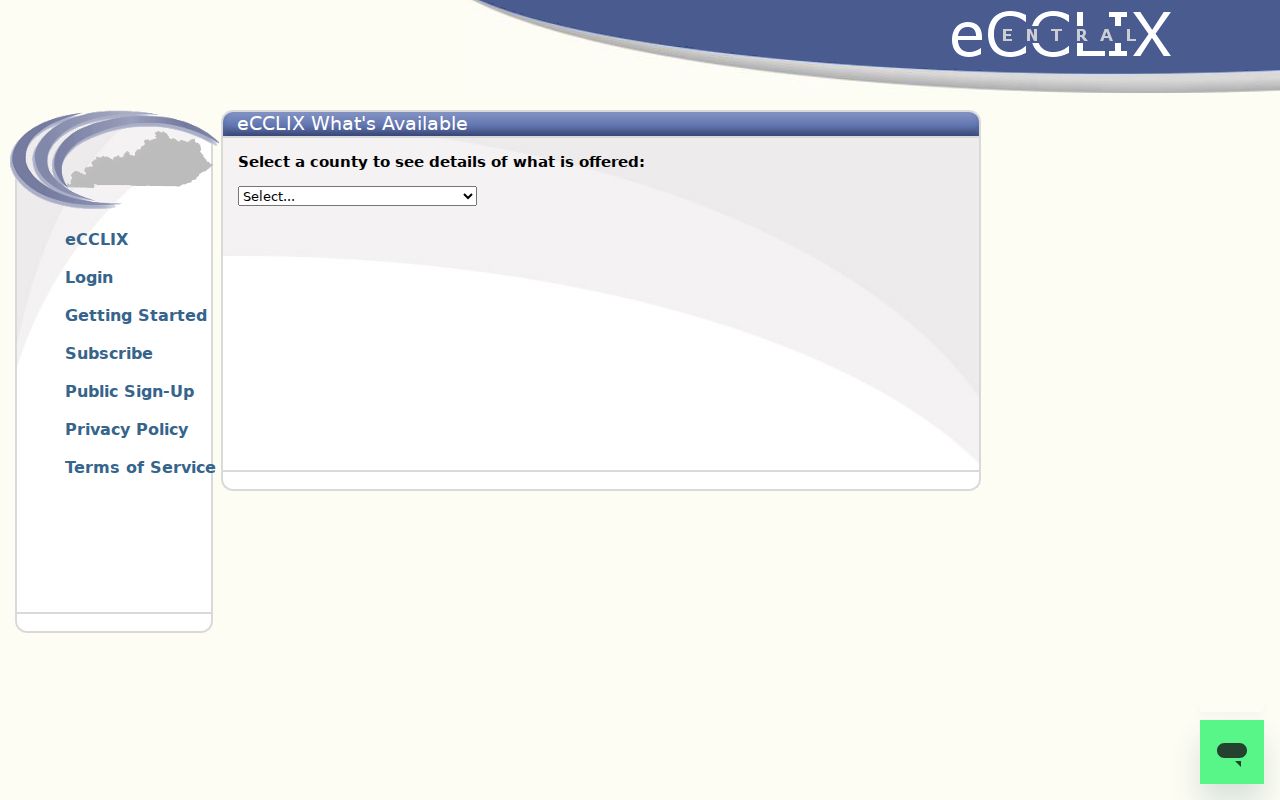
That gap is a reason to ask the Clerk. Guessing a year, or assuming the oldest books are lost, only corrupts the chain of title.
Following Franklin County's Grantor-Grantee Trail
A chain of title is the ordered run of instruments touching one piece of land. The latest deed usually cites the prior record. That citation bridges to the earlier deed. The Kentucky Department for Libraries and Archives advises checking both grantor and grantee indexes, including alternate spellings and special index marks.
- Identify the current deed and confirm its legal description, recording date, and recipient. Treat the recipient as the grantee.
- Read the grantor and any prior deed reference. Use that citation before relying on a broad name search.
- Search the prior grantor as a grantee to locate the deed by which that party received the land.
- Repeat while checking married names, trust or estate names, abbreviations, and H, C, or S markers for heirs, commissioner, or sheriff instruments.
- When the web index ends, carry the last sound book/page and party pair to the Clerk or archive series.
- Grantor
- The person or entity transferring the described interest.
- Grantee
- The person or entity receiving it.
- Chain of title
- The linked sequence of transfers for the same land.
- Book/page
- A volume and page citation used to retrieve an older filing.
- Document number
- A unique modern filing reference assigned by the records system.
When Franklin County Deed Records Change Form
Chains pass through estates, trusts, corporations, commissioners, and sheriffs. Corrections, releases, restrictions, and affidavits may clarify one. A warranty-only search under one modern spelling leaves false gaps.
Mortgage releases, lis pendens, judgment liens, assignments, tax-delinquency papers, easements, and plats are common between transfers. These papers often explain what happened between two ownership transfers. A deed image may point to an older deed the first result list hides. Follow that trail even when the list skips it. Keep the deeper instrument context with the land chain. A general address lookup belongs on the Franklin County property search.
Note: A sheriff or commissioner filing may sit in a special index or among ordinary instruments. Check both places.
Posted Franklin County Recording Fees in Context
The Clerk's posted recording schedule prices a standard deed at $50. A correction deed costs $46. Restrictions, easements, real-estate contracts, and plats each run $50. A mortgage runs $80, while a mortgage with assignment reaches $126. Many releases and modifications cost $46. A $3 per-page addition starts after five pages, while mortgages use a 30-page threshold.
These are filing charges, not a fixed price for an online print or certified deed copy. Give the Clerk the document number or book and page, the party names, the recording date, and the format needed. Then ask about certification, pages, postage, and delivery. Fees change, so check the schedule before sending payment.
Ways to Obtain a Franklin County Deed
Start online. eCCLIX carries the index and images for Franklin County deed records, which makes it the easiest route for most lookups. When that does not turn up what you need, go straight to the Franklin County Clerk at 315 W Main Street, Suite 11, Frankfort, KY 40601, or call 502-875-8702. Tell the staff exactly which format you want, whether that is an uncertified image, a certified copy, a book/page copy, a plat-size copy, or a digital file.
A record that eludes the online index still has options. Give the Clerk party names, a rough date, the instrument type, a legal-description clue, and any citation you already have. Kentucky's Open Records Act, KRS 61.870 through 61.884, offers a request framework for qualifying public records. Even so, a targeted inquiry to the Clerk is usually the fastest first move.
Recorded is not guaranteed title. Franklin County deed records show accepted filings, not every possible interest. A title opinion requires a complete professional examination.
Franklin County Deed Books Beyond the Portal
Franklin County dates to 1795. Deeds from that founding year survive on microfilm. The coverage runs through 2010, according to the KDLA land-record inventory. What sits online is a different question. The public eCCLIX portal simply does not reach back that far. So an old deed can exist even when no digital copy does. That gap trips up plenty of researchers. They expect the portal to mirror the full deed records.
The is more material beyond deeds. KDLA lists Franklin tax-assessment books covering 1795 through 2007, though with gaps across those ranges. The FamilySearch catalog adds a deeds index for 1795 through 1807. Oddly, that description places a Franklin courthouse in Lexington. So treat the catalog as a finding aid. The County Clerk can settle where the physical volumes live.
Note: No courthouse-loss event is on record, so any missing scan is unscanned rather than a destroyed Franklin County deed.
Requesting Historic Franklin County Deed Records
Need an older deed? The KDLA records-request service handles deed and tax lookups for archived material. The posted fee is $20 for an in-state search and copy request. From out of state, it is $25. That charge is nonrefundable. Extra scan, print, or postage costs can apply in some cases. Plan on four to six weeks for a reply. Give the repository precise details. List Franklin County, the record type, a year range, and party names. Include any book, page, or reel number you know. A legal-description clue helps too. The KDLA address is 300 Coffee Tree Road in Frankfort. The phone number is 502-564-8300. For certified copies and current instruments, the courthouse deed books and the County Clerk remain the best channels.
Limits of a Franklin County Deed Result
A deed tells you who transferred land. It does not tell you much else. Taxes may be unpaid even when a clean deed sits on file, and no deed confirms that a structure meets code. Zoning districts and surveyed boundaries appear in other county sources, not in the instrument itself. The consideration figure deserves a skeptical eye too, since it can be nominal or reflect a transfer that never hit the open market. For questions about land lines, the deed's legal description remains the controlling language, and the GIS map is only general information to weigh against a plat and survey.
Dates need the same care. Execution shows when the parties signed. Recording shows when the Clerk accepted the instrument. Because a late recording can shuffle the apparent order of events, keep both dates, the instrument type, and any prior-deed citation together. When filings overlap or a correction rewrites the description, pull the images and ask the Franklin County Clerk how each entry is indexed before trusting any chain of title.
Put Franklin County deed records to lawful uses: purchase research, estate work, boundary questions, and property history. Refrain from copying or sharing personal addresses and party details without a sound reason. For anything critical, confirm with the custodian and a qualified title professional.